
Blog
12 March 2026
How Photo Clipping Services Improve Real Estate Image Presentation
First impressions in property marketing are made visually — and they're made fast. A buyer scrolling through listings online isn't spending minutes evaluating each one. They're making quick calls based on what they see, and if the photos don't hold their attention immediately, the listing gets skipped regardless of how good the property actually is.
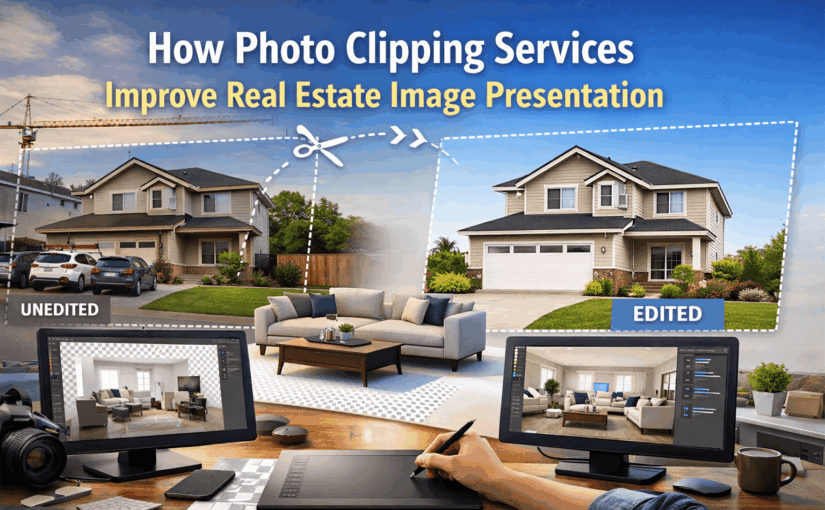
The challenge is that even well-shot property photos can work against you. A cluttered background, an awkward object in the frame, surroundings that pull the eye away from the property itself — these things quietly undermine an otherwise strong image. That's the gap photo clipping services are designed to close.
By isolating what matters and removing what doesn't, professional photo cutout work turns competent property photography into genuinely clean, marketing-ready visuals. The property gets the full attention. Everything else disappears.
What a Photo Clipping Service Actually Does
At its most straightforward, photo clipping is about precision separation. An editor draws an accurate path around a specific subject — a property exterior, a room interior, a piece of furniture — and uses that path to remove, replace, or simplify everything surrounding it.
In real estate, that translates into a range of practical photo editing tasks. Sometimes it's clearing a cluttered background from an outdoor shot. Sometimes it's isolating a room so digital staging can be applied cleanly. Sometimes it's pulling out a specific architectural feature so it can sit properly within a brochure layout.
A photo cutout service in a real estate context typically handles things like:
- Removing backgrounds cleanly without leaving rough or visible edges
- Isolating furniture, fixtures, or architectural elements for separate use
- Clearing rooms ahead of virtual staging work
- Creating clean or transparent backgrounds for design and print applications
The standard the work is held to is simple: when it's done properly, nobody should be able to tell it happened. The image just looks right.
Why Image Cleanliness Has a Direct Marketing Impact
Property buyers aren't consciously grading your photos against a checklist. But they are reacting to them — quickly and instinctively. An image that feels busy or visually noisy creates a low-level sense of disorder that buyers associate with the property itself, even if nothing about the property warrants it.
The reverse is also true. A clean, well-composed image — one where the eye lands naturally on the right things — creates a sense of quality and care. Buyers spend longer with it. They explore the listing further. They form a more positive impression of the property and, by extension, the agent or developer behind it.
Background removal for real estate photos works precisely because it removes the friction between the buyer and what they're actually supposed to be looking at. The property becomes the obvious subject. Nothing competes with it.
From a marketing standpoint, that shift in presentation tends to show up in concrete ways:
- Buyers spend more time engaging with the listing rather than scrolling past it
- Key property features get noticed rather than buried in visual noise
- The overall listing looks more professional and considered
- Images work more flexibly across different marketing formats and platforms
Five Ways Photo Clipping Strengthens Property Images
1. Eliminating What Doesn't Belong in the Frame
Real estate photography rarely happens under controlled studio conditions. Outdoor shoots come with whatever happens to be there on the day — nearby vehicles, construction activity on an adjacent lot, utility lines cutting across an otherwise clean sky, neighbours' fences creeping into the frame.
Interior shots have their own version of the same problem: temporary clutter, personal items, equipment left behind after a shoot, fixtures that don't photograph well.
Clipping and background removal take care of all of it in post-production. The result is a clean image that presents the property as it should look — not as it happened to look at 10am on a Tuesday when the shoot took place.
2. Directing Attention to the Right Things
Removing distractions is half of what clipping achieves. The other half is focus — giving the viewer's eye a clear path to land on what actually matters in the image.
For a kitchen shot, that might mean the island or the cabinetry. For an exterior, it might be the facade or landscaping. For an interior design piece, it might be a specific finish or architectural detail. Once competing visual noise is stripped out, those elements don't just survive — they stand out.
This makes a meaningful difference in how buyers process and remember a property. Images with clear focal points are more memorable and more persuasive than those where attention is scattered.
3. Preparing Images for Virtual Staging
Virtual staging has become a standard tool for marketing vacant and unfurnished properties. But the quality of the staged result depends heavily on what the base image looks like before any staging is added.
If the room contains furniture that clashes with the intended design direction, or objects that will sit awkwardly alongside digital additions, the staging looks off in ways that buyers notice even if they can't articulate exactly why. It undermines the realism that makes virtual staging valuable in the first place.
Photo clipping work upstream — clearing the room, removing what doesn't belong, creating a genuinely clean base — sets up the staging for success. The digital furniture sits naturally. The finished image reads as cohesive. The whole thing works.
4. Making Images More Versatile Across Marketing Formats
A property photo doesn't live in just one place. It starts in the MLS listing, then shows up in a printed brochure, then gets cropped for a social media post, then gets placed into a website layout that has its own design requirements. Each of those formats has different dimensions, different backgrounds, different compositional needs.
An image with a complex or location-specific background can't adapt to all of those contexts gracefully. An image with a clean or transparent background can go almost anywhere without fighting the design around it.
Clipping services give marketing teams the flexibility to use property images across the full range of channels without having to reshoot or awkwardly crop around a background that doesn't travel well.
5. Building Visual Consistency Across a Portfolio
A single strong image is useful. A full set of images that look like they belong together — consistent sky tones, matched lighting treatment, no random clutter appearing in some shots and not others — is what makes a listing feel genuinely polished.
For agencies and developers managing multiple properties, that consistency also becomes part of how the brand presents itself. A portfolio where every listing looks cohesive and carefully edited signals a standard of professionalism that clients and buyers both respond to.
Photo cutout work is part of what makes that consistency achievable at scale, particularly when post-production is being handled across large batches of images.
Where This Editing Gets Used Practically
MLS listings — The most immediate application. Cleaner images generate more saves, more click-throughs, and more viewing requests on the portals where most buyers begin their search.
Property brochures — Print design requires images that integrate cleanly into layouts. Isolated subjects with clean backgrounds slot into brochure designs without creating visual conflicts that require workarounds.
Agency and developer websites — A dedicated property page with consistently edited, background-cleaned images simply looks more professional. It builds credibility with buyers who are evaluating whether to take the next step.
Architectural and interior design portfolios — Firms presenting completed project work often need to highlight specific design decisions — a particular material, a bespoke feature, a custom element — without building an entirely new shoot around it. Clipping makes that possible.
When Does It Make Sense to Use These Services?
Not every image needs this level of attention, and good judgement matters here. But the situations where photo clipping clearly pays off are fairly easy to identify:
- The shoot conditions left distracting elements in the frame that can't be resolved through cropping
- The images are going into a virtual staging workflow and need proper preparation
- Marketing materials require isolated visuals for custom design layouts
- A high volume of images needs consistent post-production treatment across the whole batch
- Specific architectural or interior features deserve more visual prominence than the raw image gives them
For photographers managing a regular pipeline of shoots, or agents handling multiple active listings simultaneously, this is the kind of editing work that creates a genuine bottleneck when handled in-house — and runs smoothly when handled by people who specialise in it.
The Practical Case for Outsourcing
Property photography generates a lot of images. A single shoot might produce hundreds of frames, and even after selection, a typical listing still requires editing across a meaningful number of files. Doing all of that in-house — including clipping, background cleanup, and consistency work — takes time that most real estate teams simply don't have to spare.
Outsourcing to a dedicated photo editing service resolves this without sacrificing quality. The files go out, the edits come back on schedule, and the standard stays consistent regardless of how many listings are moving through the pipeline at once.
What that arrangement typically delivers:
- Faster turnaround that keeps listing timelines on track
- Consistent editing quality across every image in the batch
- Work handled by editors who understand real estate imagery specifically
- Capacity that scales up during busy periods without any internal pressure
Final Thoughts
Strong property images don't happen automatically — they're built through good photography and careful post-production. Photo clipping services are one of the tools that make the second part possible, by removing the visual noise that gets between a buyer and the property they're looking at.
Whether the goal is cleaning up a listing for MLS, preparing images for virtual staging services, or building a consistent visual portfolio across dozens of properties, professional photo cutout work earns its place in any serious real estate marketing workflow.
The buyers who eventually make an offer will never think about the editing. They'll just remember that the property looked right from the moment they saw it.
FAQs
What exactly is a photo clipping service?
Think of it as highly precise editing work. Rather than broad adjustments that affect the whole image, an editor carefully outlines a specific subject — a room, a property exterior, a piece of furniture — and separates it from everything surrounding it. In real estate, that capability gets used in all sorts of practical ways: tidying up listing photos, stripping out background distractions, and getting images into a state where they can work across different marketing formats without any issues.
How do photo cutout services help with property marketing specifically?
A lot of what makes a property photo fall flat isn't the property — it's everything else in the frame pulling the viewer's attention in the wrong direction. Cutout editing clears that out. Once the surrounding distractions are gone, buyers' eyes go straight to the property itself, which is exactly where you want them. That sharper focus tends to translate into better engagement with the listing and gives the images far more flexibility when they need to be used across brochures, websites, and advertising materials.
Can clipping work support virtual staging?
Yes, and it often does. Before staging elements can be added convincingly, the base image usually needs preparation — removing existing furniture, clearing objects, creating a clean room structure for the digital additions to sit within. Clipping handles that preparation stage.
Do real estate photographers typically outsource this kind of work?
Many do, particularly those with consistent weekly output. Managing clipping and background removal in-house alongside shooting and client communication is genuinely difficult to sustain during busy periods. Outsourcing keeps the quality consistent and the turnaround predictable.
Are clipped images useful beyond the MLS listing?
Considerably so. Isolated images with clean backgrounds are much more versatile — they integrate cleanly into brochure designs, website layouts, social media formats, and advertising materials without the background fighting whatever design surrounds them.