
Blog
6 May 2026
2D vs 3D Floor Plans: Which One Actually Gets Buyers to Act?
Most people browsing property listings stop scrolling for two reasons — a striking photo, or a floor plan that finally makes the layout click.
Photos do the emotional heavy lifting. But once someone is genuinely interested, they start asking practical questions. How big is that bedroom really? Does the kitchen open into the living area? Where exactly are the bathrooms? A good floor plan answers all of that in seconds.
Real estate agents and developers today mostly use either 2D or 3D floor plans — sometimes both. But plenty of people in the industry still aren't sure which format actually pushes buyers toward a decision. Let's talk through that honestly.
Why Buyers Care About Floor Plans More Than You'd Think
Here's something worth understanding: buyers who skip listings without floor plans aren't being lazy. They genuinely cannot evaluate the property properly without one.Wide-angle photography is almost designed to mislead. A cramped hallway can look grand. A tiny bedroom can look cozy rather than small. Buyers know this, and experienced ones especially have learned not to trust photos alone.
A floor plan cuts through that. It shows how rooms connect, where the natural flow of movement is, and whether the layout actually suits how someone lives. That kind of clarity builds trust — and trust moves buyers forward.
What 2D Floor Plans Actually Do Well
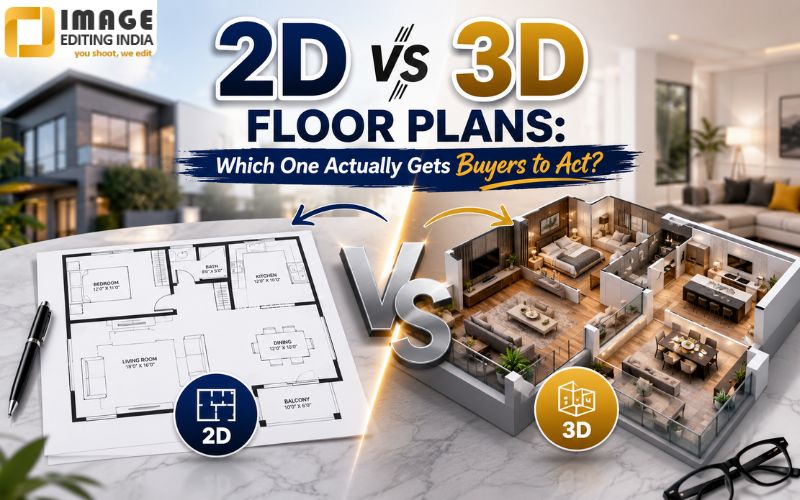
A 2D floor plan is essentially a clean top-down drawing of the property. Walls, doors, windows, room labels, measurements — laid out simply and without decoration.
There's nothing flashy about them, and that's precisely the point.
Buyers who are seriously comparing two or three properties will almost always pull up the 2D plan. They want to know if the master bedroom is large enough for their existing furniture. They want to check whether there's a bathroom near the guest room. They're thinking practically, not emotionally.
Investors, architects, and buyers who've been through the process before tend to rely heavily on 2D layouts. The no-frills format gives them exactly what they need without anything getting in the way.
From a business standpoint, 2D plans service are also faster to produce and considerably cheaper. For agencies managing dozens of listings at once — rental apartments, mid-range residential homes, commercial spaces — that matters quite a bit.
What 3D Floor Plans Do Differently
A 3D floor plan takes that same layout and renders it with furniture, textures, lighting, and depth. Instead of reading a drawing, buyers are essentially looking at a styled, top-down view of how the finished space might actually look.
The difference in response is noticeable.
First-time buyers especially struggle with technical floor plan drawings. Symbols, scale, room labels — it takes some practice to interpret all of that confidently. A 3D version removes that friction entirely. The bedroom looks like a bedroom. The open-plan living area reads immediately as spacious or cozy or well-connected to the kitchen.
That visual familiarity triggers something different in buyers. It moves them from "I'm trying to understand this property" to "I can actually imagine living here." That shift is significant.
The Honest Answer on Which One Converts Better
Neither format wins cleanly — and anyone telling you otherwise is probably oversimplifying things.
What tends to happen in practice is this: a 3D floor plan attracts attention and gets buyers emotionally invested. Then the 2D plan steps in and helps them confirm, logically, that the property works for their life.
Think of it as two different stages of the same decision. The 3D version creates desire. The 2D version builds confidence.
For luxury homes, off-plan developments, and new construction projects, 3D floor plans are almost essential. When the property isn't finished yet — or when buyers are purchasing from overseas or based purely on marketing materials — a realistic visual layout can be the difference between interest and action.
For rental listings, standard apartments, investor-focused properties, or anything where the buyer is primarily concerned with layout efficiency rather than lifestyle appeal, a clean and accurate 2D plan often does the job well on its own.
Where Each Format Makes Most Sense
2D floor plans tend to work best for rental properties, apartment complexes, commercial spaces, investor presentations, and listings on property portals where buyers are scanning quickly and comparing multiple options.
3D floor plans tend to shine for luxury homes, pre-launch developments, vacation properties, interior design presentations, and any marketing where the visual experience itself is part of the appeal — social media campaigns, brochures, premium listings.
Why the "Use Both" Approach Works
A growing number of real estate businesses now include both formats as standard. It's not about overloading buyers with information — it's about meeting them where they are at different points in their decision.
Someone browsing casually on a Sunday afternoon responds differently than someone who's already had two viewings and is trying to narrow down a shortlist. The 3D plan works for the first person. The 2D plan works for the second. If you only have one, you're only serving half the journey.
One Thing That Matters Regardless of Format
A poorly made floor plan — wrong scale, cluttered layout, furniture placed in ways that make no spatial sense — can actually hurt a listing. Buyers notice, even if they can't articulate why. It makes the whole presentation feel less trustworthy.
Professionally produced plans, whether 2D or 3D, signal that the seller is serious. That subconscious signal matters more than most people realise.
To Wrap Up
Neither 2D nor 3D floor plans are universally better. They serve different purposes, speak to buyers at different stages, and work best for different types of properties.
If budget is tight, a clean and accurate 2D plan still adds real value. If the property warrants the investment, 3D visuals can meaningfully increase engagement and emotional connection. And if the goal is to give buyers the best possible experience from first glance to final decision — using both together is genuinely worth considering.